As summer fades and Massachusetts temperatures begin to drop, homeowners have plenty of seasonal tasks competing for attention. Gutters need cleaning, outdoor furniture needs storing, and heating systems may need servicing.
One important task, however, can easily be overlooked: preparing the irrigation system for winter. Water left inside irrigation pipes, valves, sprinkler heads, and other components can become a concern when temperatures fall below freezing.
Proper Massachusetts irrigation winterization helps prepare these systems for months of cold weather and can reduce the risk of discovering avoidable problems when spring arrives.
Not sure where to begin? Use this checklist to understand what winterization involves and which areas of your irrigation system deserve attention.
Does an Irrigation System Need to Be Winterized?
In a cold-winter climate like Massachusetts, irrigation systems generally require seasonal preparation.
Turning off the controller alone is not enough. Even when sprinklers stop running, water may remain inside underground lines, valves, sprinkler heads, backflow prevention assemblies, and exposed plumbing. As temperatures drop, this remaining water may freeze and expand, potentially placing stress on irrigation components.
That is why irrigation winterization in Massachusetts focuses on more than simply stopping the watering schedule. The goal is to properly shut down the system and remove or address water remaining in vulnerable areas.
The exact winterization process depends on how the irrigation system was designed, so homeowners should understand their system before attempting to drain it themselves.
When Should You Winterize an Irrigation System in Massachusetts?
Ideally, winterization should happen before sustained freezing conditions arrive.
There is no single calendar date that works for every Massachusetts property. Temperatures vary from year to year, and conditions can differ depending on where a property is located. The irrigation system’s design and the amount of exposed equipment can also affect its vulnerability to cold weather.
Waiting until after a significant freeze may defeat the purpose of preventive winterization. At the same time, shutting the system down unnecessarily early could leave a landscape without irrigation during a warm, dry stretch of fall.
Keep an eye on nighttime forecasts and plan ahead. Professional irrigation companies can also become busy as winter approaches, making early scheduling worthwhile.
The Complete Massachusetts Irrigation Winterization Checklist
Use this Massachusetts irrigation winterization checklist to prepare the essential parts of your system for freezing temperatures and the winter months ahead.

1. Inspect Your Irrigation System
Before shutting everything down, run each irrigation zone one final time while weather conditions allow.
Watch the sprinkler heads and look for leaks, damaged components, unusual spray patterns, or areas receiving noticeably too much or too little water. Record anything that may require attention during spring startup.
A seasonal inspection can also uncover water-wasting problems. According to the U.S. Environmental Protection Agency (EPA), a household with an automatic landscape irrigation system that is not properly maintained and operated can waste up to 25,000 gallons of water annually.
Taking a few notes or photos in the fall can make it much easier to remember what needs attention several months later.
2. Shut Off the Irrigation Water Supply
The next step is stopping water from entering the irrigation system.
Locate the dedicated irrigation shutoff valve and make sure you understand which valve controls the system. Plumbing and irrigation configurations can vary between properties, so avoid assuming that one home’s setup will be identical to another.
Shutting off the supply is essential, but remember that doing so does not necessarily remove water already sitting inside the system.
3. Address the Backflow Preventer and Exposed Components
Backflow prevention assemblies, valves, and other above-ground components can be particularly exposed to cold air.
Inspect visible equipment for existing cracks, leaks, or other signs of damage. The appropriate winterization procedure depends on the equipment and system configuration, so manufacturer recommendations should be followed.
If you are unfamiliar with the backflow equipment or aren’t certain how it should be prepared for winter, this is a good point to involve an irrigation professional.
4. Remove Water From the Irrigation Lines
Getting residual water out of the system is one of the most important parts of winterization.
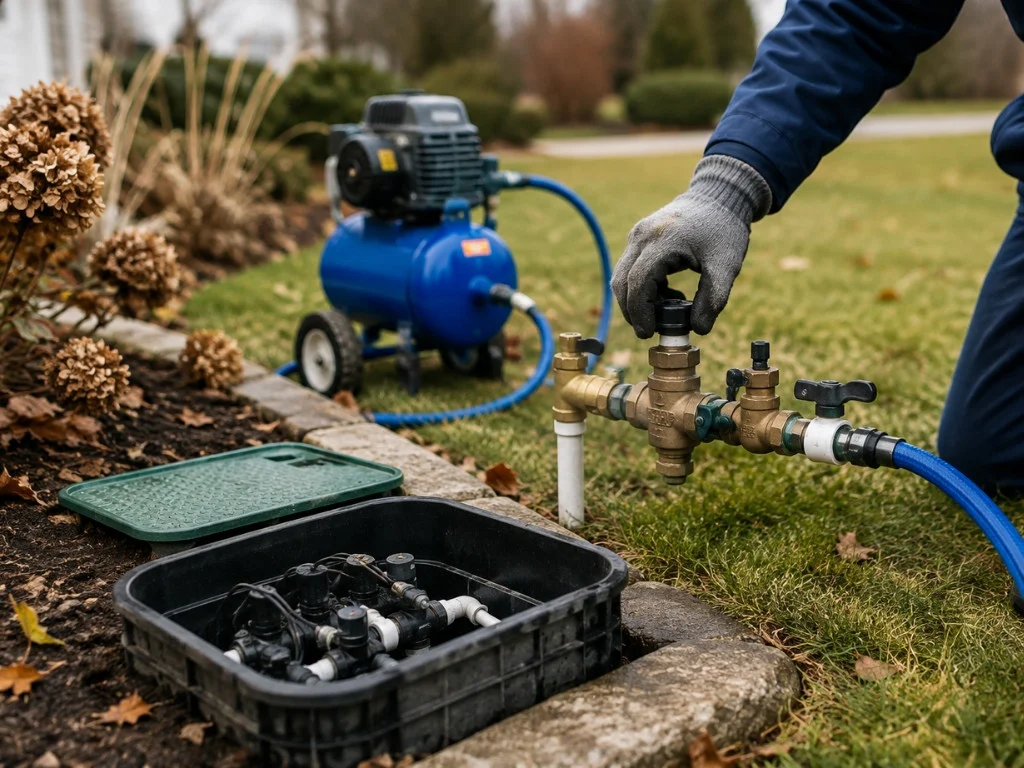
Depending on the system, water may be removed through manual drainage, automatic drainage, or compressed-air winterization, commonly called a sprinkler blowout.
These methods are not interchangeable. An automatic-drain system, for example, works differently from one designed for manual drainage.
Compressed-air winterization also requires appropriate equipment and knowledge. Too much pressure or improper procedures can damage irrigation components and create safety hazards. Homeowners who don’t know which method their system requires should avoid experimenting and consult a qualified professional.
5. Know When a Professional Sprinkler Blowout Is Needed
During a professional blowout, compressed air is introduced into the irrigation system to help move residual water from the lines and individual zones.
The process is performed systematically so different parts of the system can be addressed. Appropriate pressure and airflow are important because irrigation components have operating limitations.
Professional assistance can be especially useful for larger multi-zone systems, unfamiliar installations, properties with complicated backflow equipment, or systems that have experienced freeze-related problems in the past.
6. Adjust the Irrigation Controller
Once water delivery has been addressed, don’t forget the controller.
Depending on the controller, an off, rain, or seasonal setting may be appropriate. Some equipment may need to remain powered to preserve programming or perform other functions.
Rather than automatically unplugging the controller, follow the manufacturer’s instructions for winter shutdown. This can make restarting and programming the system easier when watering season returns.
7. Document Repairs for Spring
Winterization is also an excellent time to create a spring irrigation to-do list.
Write down damaged sprinkler heads, suspicious valves, coverage problems, leaks, or other issues you noticed during the final inspection. Take photos where helpful and keep any professional service records.
When spring arrives, you’ll have a clear starting point rather than trying to remember problems you noticed months earlier.
How Do I Winterize My Irrigation System?
In simple terms, winterizing an irrigation system involves shutting off the irrigation water supply, addressing backflow and exposed components, removing residual water using the system’s appropriate drainage method, and setting the controller for winter.
Homeowners can often handle basic tasks such as inspecting sprinkler heads, documenting problems, and learning where the irrigation shutoff is located.
Removing water from the entire system can be more complicated. If you don’t know how your irrigation system was designed or whether it requires a compressed-air blowout, professional guidance is the safer approach.
Is Professional Irrigation Winterization Worth It?
Professional winterization can be particularly valuable when a homeowner isn’t familiar with the system’s configuration or drainage requirements.
An irrigation professional can identify how the system should be shut down and systematically address its zones and components. This can remove much of the guesswork involved in preparing an irrigation system for Massachusetts winters.
The importance of properly managed irrigation extends beyond winterization. The EPA estimates that residential outdoor water use accounts for nearly 8 billion gallons of water per day in the United States, primarily for landscape irrigation.
Maintaining irrigation equipment throughout its operating life can help homeowners use these systems more responsibly and efficiently.
Don’t Forget Your Irrigation System Until Spring
A sprinkler system may disappear from your daily routine once the growing season ends, but it shouldn’t simply be forgotten when cold weather approaches.
Start with a final inspection. Shut off the irrigation water supply, address backflow and exposed components, remove residual water using the appropriate method, adjust the controller, and document anything that needs attention next spring.
Most importantly, don’t guess when you’re unfamiliar with the equipment. Effective irrigation winterization in Massachusetts is about preparing the entire system correctly, not simply turning the sprinklers off.
Massachusetts homeowners who want help getting their systems ready for winter can turn to Corbett Irrigation for professional irrigation winterization and seasonal system care. Schedule your winterization service before freezing conditions arrive so your irrigation system is properly prepared for the colder months ahead.