Maintaining a lush, healthy landscape doesn’t have to come at the expense of water conservation. Yet many homeowners unknowingly overwater their lawns or rely on outdated irrigation practices that waste water and increase utility bills.
According to the U.S. Environmental Protection Agency (EPA), residential outdoor water use accounts for nearly 9 billion gallons of water every day, with as much as 50% wasted due to evaporation, runoff, and inefficient irrigation practices.
That’s why Smart Irrigation Month, observed each July, encourages homeowners to take a closer look at their watering habits and find more efficient ways to care for their landscapes. By making a few smart adjustments, property owners can create healthier, more sustainable landscapes while reducing unnecessary water use.
What Is Smart Irrigation Month?
Smart Irrigation Month is an annual public awareness campaign led by the Irrigation Association to promote efficient water use and sustainable irrigation practices. The initiative encourages property owners to evaluate their irrigation systems and adopt practices that reduce water waste while maintaining healthy landscapes.
Observed every July during the peak irrigation season, the campaign encourages homeowners, businesses, and property managers to consider how efficiently they water their landscapes. Rather than simply watering less, Smart Irrigation Month emphasizes delivering the right amount of water at the right time to support plant health while minimizing waste.
Why Is Smart Irrigation Important?
Smart irrigation goes beyond conserving water. It improves the overall health and longevity of your landscape while reducing unnecessary costs. Efficient irrigation provides several long-term benefits, including:
- Healthier lawns, trees, and garden beds through consistent moisture.
- Lower water bills by reducing unnecessary irrigation.
- Less runoff that can carry fertilizers and soil into nearby waterways.
- Reduced wear on irrigation systems by preventing overuse.
- Stronger landscapes that are better prepared for periods of drought or extreme heat.
When watering is tailored to your landscape’s actual needs instead of a fixed schedule, plants develop deeper root systems and become more resilient throughout the growing season.
Signs Your Landscape Could Be Wasting Water
Many irrigation problems aren’t immediately obvious. Recognizing the warning signs early can help prevent water waste and improve your system’s performance.
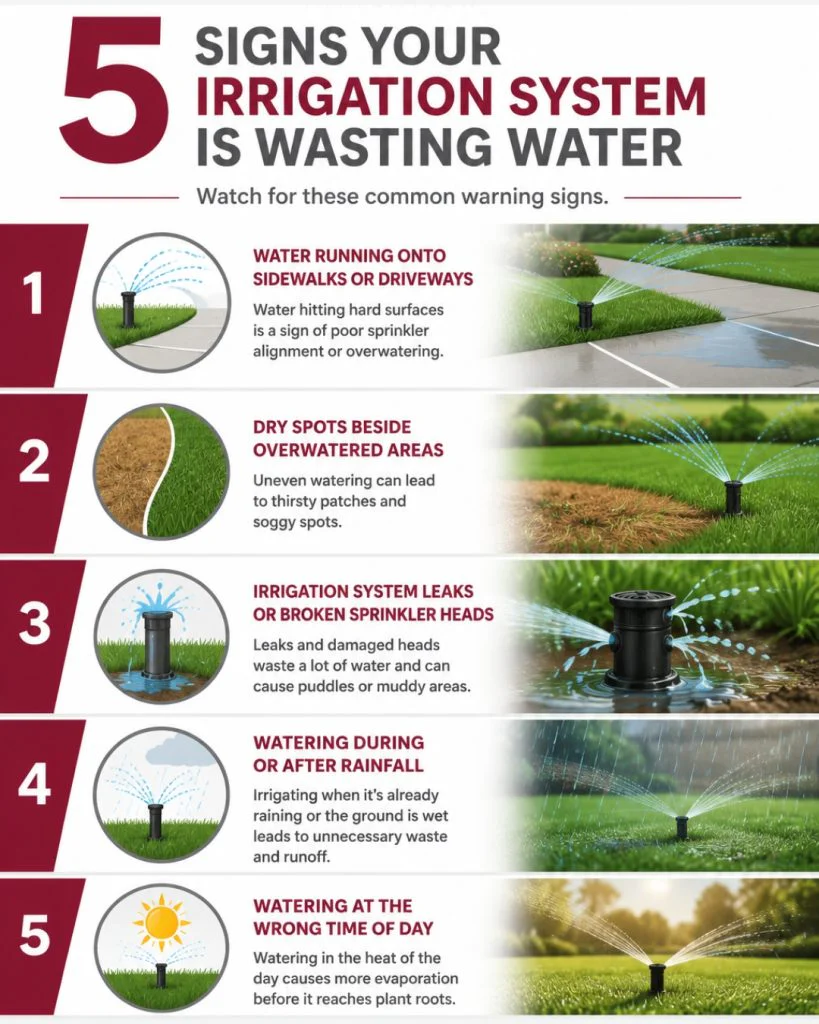
- Water Running Onto Sidewalks or Driveways: Water flowing onto hard surfaces usually indicates poor sprinkler alignment or excessive watering. Instead of soaking into the soil, the water runs off onto pavement where it cannot benefit your landscape, resulting in unnecessary water waste.
- Dry Spots Beside Overwatered Areas: Uneven watering often results from clogged nozzles, poor sprinkler coverage, or incorrect pressure. Some sections receive too much water while others receive too little, forcing longer watering cycles that waste water while still leaving parts of the landscape unhealthy.
- Irrigation System Leaks or Broken Sprinkler Heads: Even a small leak can waste significant amounts of water over time. Damaged sprinkler heads may spray unevenly, create puddles, or fail to water parts of your landscape altogether, causing water to be lost before it reaches the plants that need it.
- Watering During or After Rainfall: Continuing to irrigate after rainfall wastes water and can oversaturate the soil. When the ground is already moist, additional watering provides little benefit and may increase runoff, carrying water away instead of allowing it to be absorbed.
- Watering at the Wrong Time of Day: Watering during the hottest part of the afternoon increases evaporation before water can reach plant roots. Early morning irrigation allows moisture to soak into the soil while minimizing water loss and reducing the risk of lawn diseases.
Simple Ways to Build a More Sustainable Landscape
A sustainable landscape uses water, soil, and other natural resources efficiently to support long-term plant health. Practices such as watering wisely, improving soil conditions, and choosing suitable plants help reduce waste while creating a healthier outdoor space.
Fortunately, many of these improvements are simple to implement and don’t require replacing your entire irrigation system.
1 | Water According to Weather Conditions
Plants lose water through evapotranspiration, a combination of evaporation from the soil and transpiration from plant leaves. Because evapotranspiration rates change with temperature, humidity, wind, and rainfall, watering on a fixed schedule often results in over- or underwatering.
Adjusting irrigation based on current weather conditions helps replace only the moisture plants have actually lost, improving water efficiency and reducing runoff.
2 | Upgrade to Smart Irrigation Controllers
Unlike traditional timers, smart irrigation controllers use local weather data, evapotranspiration estimates, or soil moisture sensors to determine when and how long to irrigate. This allows the system to automatically reduce watering after rainfall or during cooler weather while increasing irrigation during periods of higher water demand.
Applying water according to plant needs improves irrigation efficiency and helps prevent root diseases caused by excess soil moisture.
3 | Perform Seasonal Irrigation Inspections
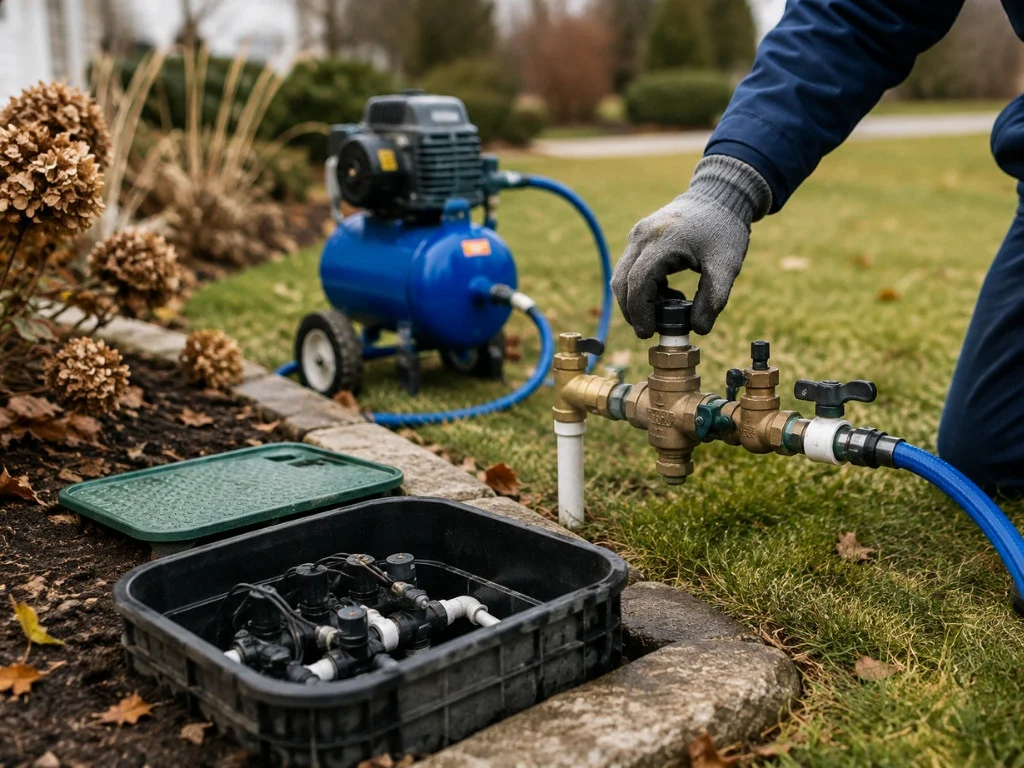
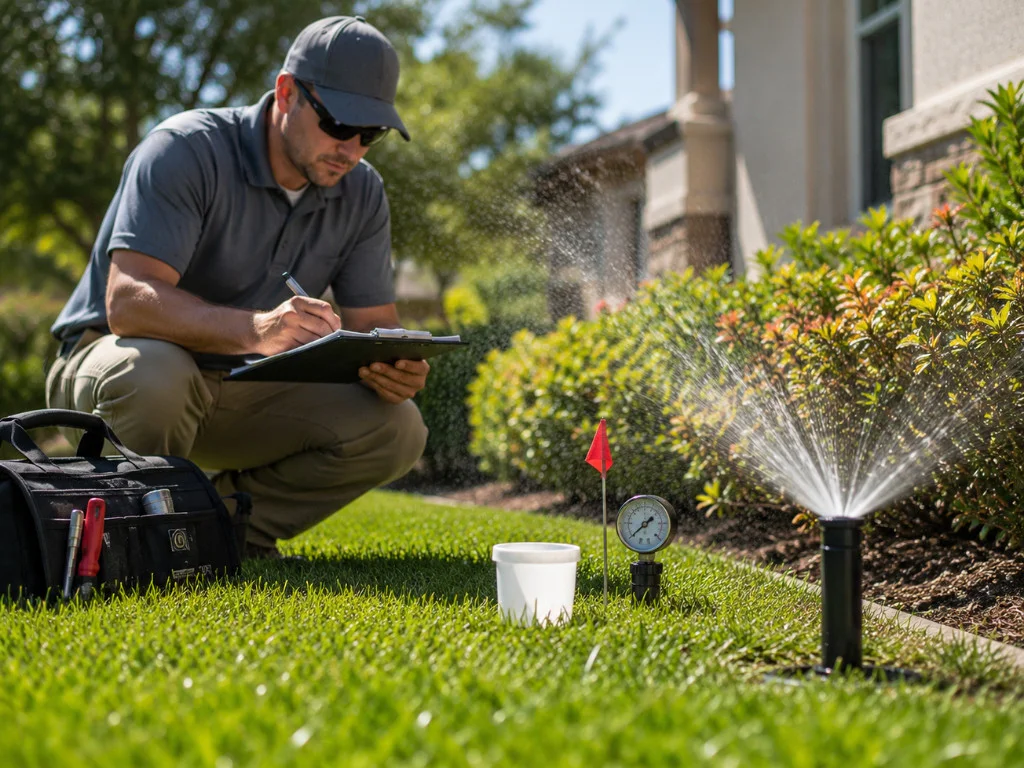
Irrigation systems gradually become less efficient as sprinkler heads shift, nozzles clog, valves wear out, or leaks develop. Seasonal inspections identify these issues before they reduce distribution uniformity, ensuring water is applied evenly across the landscape.
Proper system maintenance also prevents unnecessary water loss and helps irrigation equipment operate at its designed pressure and flow rate.
4 | Improve Soil With Mulch
Mulch acts as a protective layer that reduces direct soil evaporation by shielding the soil surface from sunlight and wind. It also moderates soil temperature, suppresses weed growth that competes for moisture, and improves water infiltration by reducing surface crusting.
As organic mulch decomposes, it contributes organic matter that enhances soil structure and increases the soil’s capacity to retain water.
5 | Choose Plants That Match Local Conditions
Plants adapted to local climate, rainfall patterns, and soil conditions generally require less supplemental irrigation once established because their growth characteristics match the surrounding environment.
Native and climate-appropriate species often develop deeper or more efficient root systems that improve access to naturally available soil moisture, reducing dependence on frequent irrigation while maintaining healthy growth.
How Corbett Supports Sustainability
Although homeowners can perform basic irrigation maintenance, professional inspections provide a more comprehensive evaluation of system performance.
Corbett Irrigation helps homeowners and property managers improve water efficiency through professional irrigation inspections, maintenance, and system optimization. The team identifies leaks, broken sprinkler heads, clogged nozzles, and uneven coverage that contribute to water waste, then makes the necessary adjustments to improve performance.
When appropriate, Corbett Irrigation also recommends water-saving upgrades, such as smart irrigation controllers and rain sensors, to support healthier landscapes and long-term sustainability.
Celebrate Smart Irrigation Month With Smarter Watering
Building a sustainable landscape begins with making smarter choices about how and when you water. By improving irrigation habits, maintaining your system, and adopting water-efficient technology, you can enjoy healthier landscapes while conserving one of our most valuable natural resources.
This Smart Irrigation Month, take the opportunity to evaluate your irrigation system and watering practices. If you’re ready to improve your system’s efficiency, Corbett Irrigation can help with professional inspections, maintenance, and smart irrigation upgrades. Contact us today to get started.