Uneven watering, dry patches, and unexpectedly high water bills often have one thing in common: a poorly understood irrigation system. Without knowing which sprinklers and valves work together, even routine maintenance can become a frustrating guessing game.
An irrigation zone map removes that uncertainty. By showing exactly how your irrigation system is organized, it helps you troubleshoot problems faster, improve watering efficiency, and avoid unnecessary repairs.
In this article, you’ll learn what irrigation zones are, how to find them, and why an irrigation map can save time, money, and water while keeping your landscape healthy.
What Are Irrigation Zones?
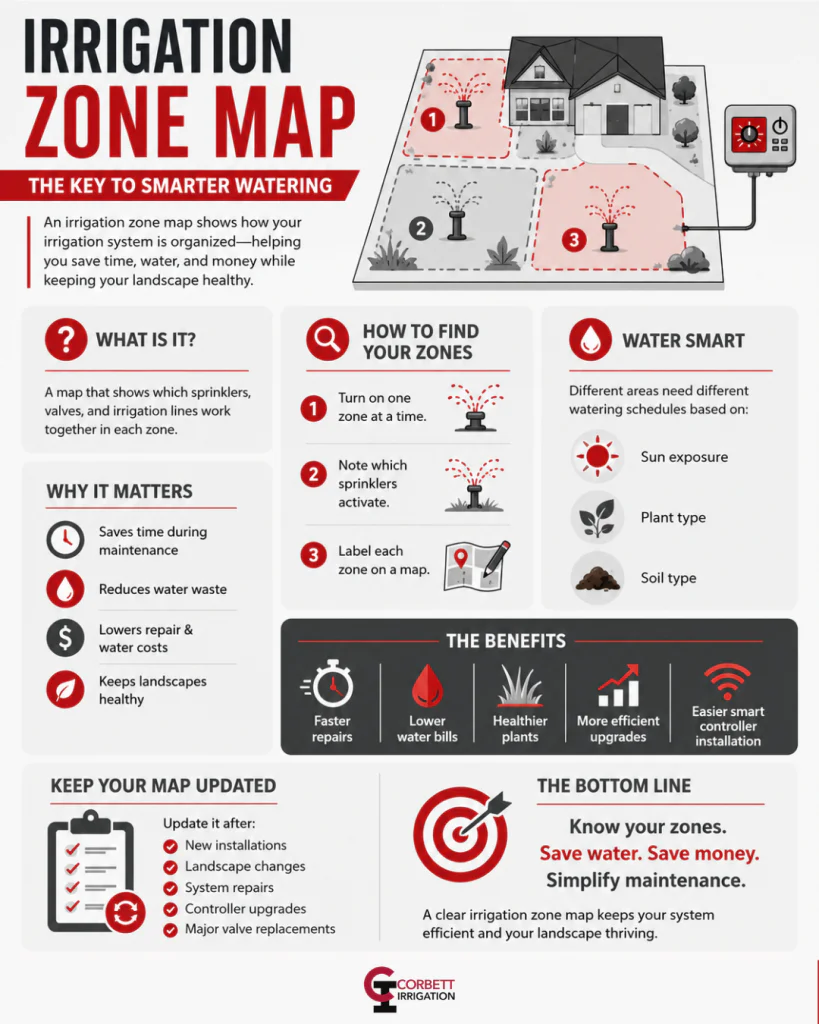
An irrigation zone is a section of your landscape that is watered together by a single irrigation valve. When that valve opens, every sprinkler head or drip emitter connected to it operates at the same time.
Most irrigation systems have multiple zones because different areas of a property have different watering needs. Separating these areas allows each one to receive the appropriate amount of water without overwatering or underwatering other parts of the landscape.
For example, a typical property may have separate irrigation zones for:
- Front lawn
- Backyard lawn
- Flower beds
- Shrubs and trees
- Vegetable garden
- Drip irrigation around landscape plants
Irrigation zones are also designed based on several site-specific factors that affect how much water different areas need. These include soil type, sun exposure, slope, plant varieties, and available water pressure.
Proper zoning allows your irrigation system to deliver water more efficiently while promoting healthier plants.
What Is an Irrigation Zone Map?
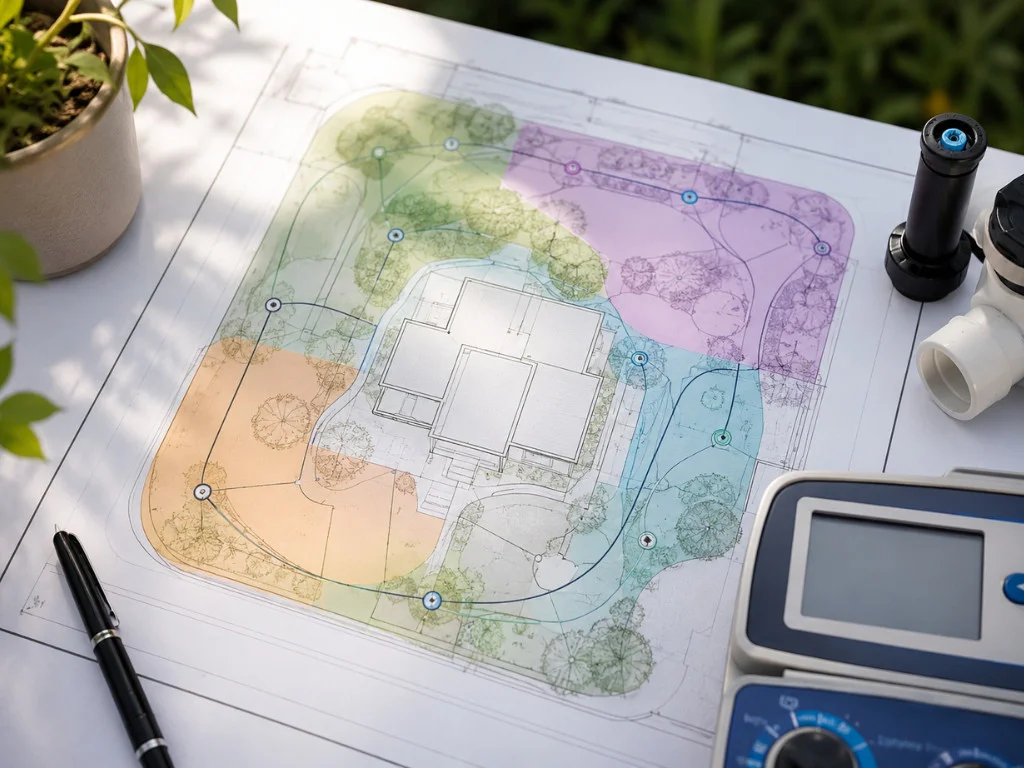
An irrigation zone map is a detailed layout showing how every irrigation zone is arranged across your property.
Rather than relying on memory or trial and error, the map identifies exactly which sprinklers belong to each zone and where important components are located.
A typical irrigation zone map may include:
- Zone numbers
- Valve locations
- Sprinkler head locations
- Drip irrigation lines
- Controller assignments
- Coverage areas
Professional irrigation contractors often create these maps during installation, but homeowners can also develop their own over time.
Having this information readily available becomes especially valuable when performing maintenance, replacing sprinkler heads, troubleshooting problems, or upgrading the irrigation controller.
How to Find Irrigation Zones
If you don’t already have an irrigation map, creating one is simpler than you might think.
Start by locating your irrigation controller. This control panel allows you to manually activate each irrigation zone.
Follow these basic steps:
- Turn on one irrigation zone at a time.
- Walk around the property while that zone is running.
- Identify every sprinkler head or drip emitter that activates.
- Sketch the area or use a digital map to record the locations.
- Label the zone number and the landscape areas it waters.
Repeat the process until you’ve documented every zone on your property.
For larger residential properties or commercial landscapes, professional irrigation contractors can prepare accurate zone maps using specialized equipment and system knowledge. This is particularly helpful when underground valves or complex drip systems make mapping more challenging.
Why Irrigation Zone Maps Save Time
One of the biggest advantages of an irrigation zone map is the amount of time it saves.
Without a map, even simple maintenance tasks often involve testing multiple zones just to locate the correct sprinkler or valve. This trial-and-error approach can quickly become frustrating.
With a zone map, you can immediately identify:
- Which valve controls a specific area
- Which sprinklers belong to each zone
- Where underground components are located
- Which controller station operates each section
This information makes seasonal startup, winterization, repairs, and system inspections much faster.
It also helps contractors diagnose problems efficiently, reducing the time spent searching for buried valves or tracing irrigation lines across the property.
How Zone Maps Help Reduce Water Waste
Water conservation is becoming increasingly important, especially in regions where drought conditions or water restrictions are common.
An irrigation map helps improve watering accuracy by making it easier to adjust irrigation schedules according to each zone’s unique needs.
Instead of applying the same watering schedule across the entire property, you can fine-tune each zone based on:
- Grass versus flower beds
- Sunny versus shaded areas
- Clay versus sandy soil
- Newly planted versus established landscaping
This level of precision helps eliminate unnecessary watering while keeping plants healthier.
According to the U.S. Environmental Protection Agency (EPA), as much as 50% of outdoor water used for irrigation is wasted because of evaporation, wind, or inefficient irrigation methods. Proper irrigation management and system optimization can significantly reduce this waste.
By understanding your irrigation zones, you’re better equipped to make smarter watering decisions that conserve water without sacrificing landscape quality.
The Financial Benefits of Knowing Your Irrigation Zones
An irrigation zone map doesn’t just save water—it can also reduce long-term costs.
When every irrigation zone is clearly identified, repairs become faster and more accurate. Contractors spend less time locating valves and diagnosing issues, which may reduce labor costs.
Accurate zone mapping can also help prevent costly landscape damage. If one zone begins malfunctioning, you’ll be able to identify the affected area sooner before plants suffer from prolonged overwatering or drought stress.
Additional financial benefits include:
- Lower monthly water bills
- Reduced repair expenses
- Less replacement of damaged plants
- More efficient irrigation upgrades
- Easier installation of smart irrigation controllers
Over the life of an irrigation system, these savings can add up significantly.
Common Mistakes People Make Without an Irrigation Zone Map
Many irrigation problems stem from simply not knowing how the system is organized. Some of the most common mistakes include:
- Using the same watering schedule for every zone
- Forgetting which valve controls each landscape area
- Digging without knowing where irrigation lines are located
- Adding new landscaping without adjusting irrigation zones
- Guessing during repairs instead of identifying the correct zone
These mistakes often lead to wasted water, unnecessary repairs, and landscape damage that could have been avoided with proper documentation.
Keeping an updated irrigation map makes future maintenance much more predictable and far less stressful.
When Should You Create or Update an Irrigation Zone Map?
Even if your irrigation system already works well, there are several situations where updating your zone map is worthwhile.
Consider creating or revising your map after:
- Installing a new irrigation system
- Completing a landscape renovation
- Adding new sprinkler heads or drip irrigation
- Replacing the irrigation controller
- Purchasing a property with an existing irrigation system
- Completing major repairs or valve replacements
Updating your map whenever changes are made ensures it remains an accurate reference for future maintenance.
Get More from Your Irrigation System
An irrigation zone map makes it easier to manage your irrigation system by simplifying maintenance, improving watering efficiency, and reducing unnecessary repair costs. Whether you’re troubleshooting a problem or adjusting seasonal schedules, knowing how your system is organized helps eliminate the guesswork.
Ready to get more from your irrigation system? Contact Corbett Irrigation today to create or update your irrigation zone map and ensure your landscape is watered efficiently, your irrigation system performs at its best, and your property stays healthy year-round.