As temperatures rise, irrigation systems work harder to keep landscapes healthy. Unfortunately, hidden issues such as leaks, uneven sprinkler coverage, and incorrect watering schedules often go unnoticed until they lead to higher water bills, unhealthy turf, or costly repairs.
Before peak watering season arrives, it’s worth asking: Is your irrigation system performing as efficiently as it should?
What Is an Irrigation Audit?
An irrigation audit is a professional evaluation of an irrigation system’s efficiency and performance. It measures how evenly water is distributed across the landscape and identifies issues that reduce efficiency.
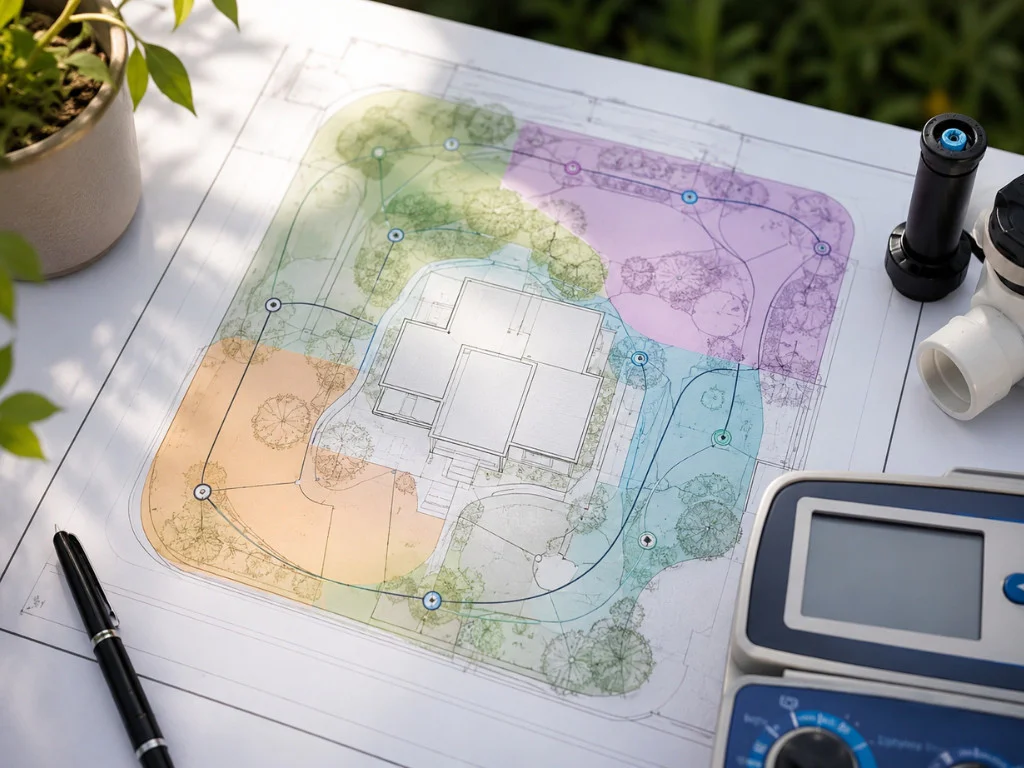
During an irrigation audit, professionals inspect sprinkler heads, valves, pipes, controllers, and water pressure while evaluating sprinkler coverage and distribution uniformity. They also review watering schedules and system settings to ensure the landscape receives the right amount of water.
Unlike a routine inspection, which primarily checks components for damage and proper operation, an irrigation audit also measures water application, distribution uniformity, and system efficiency to support data-based improvements.
What Is the Purpose of an Irrigation Audit?
The primary purpose of an irrigation audit is to determine whether an irrigation system applies water efficiently and uniformly. Even a system that appears to be functioning normally may waste significant amounts of water if sprinkler heads are misaligned, pressure is inconsistent, or controllers are programmed incorrectly.
An irrigation audit helps property owners:
- Reduce unnecessary water waste
- Improve irrigation efficiency
- Identify leaks and damaged components
- Promote healthier lawns and plantings
- Lower long-term water and maintenance costs
Instead of relying on guesswork, an audit uses measurable data to identify problems and recommend targeted improvements that benefit both the landscape and the property’s operating budget.
Why Schedule an Irrigation Audit Before Peak Watering Season?
Before summer heat pushes your irrigation system into full use, an audit can help uncover small problems that may otherwise lead to wasted water and higher bills. In a 2026 study published in the Journal of the American Water Resources Association, 59 households reduced their combined landscape water use by about 100,300 gallons per week after receiving irrigation audits.
- Catch Problems Early: Find leaks, clogged nozzles, and damaged sprinkler heads before they lead to costly repairs and water waste.
- Improve Water Efficiency: Optimize sprinkler coverage, watering schedules, and system pressure to reduce unnecessary water use.
- Support Healthier Landscapes: Ensure even water distribution to prevent dry spots, overwatering, and plant stress.
- Prepare for Water Restrictions: Improve system efficiency to help meet seasonal watering regulations while maintaining a healthy landscape.
What Happens During an Irrigation Audit?
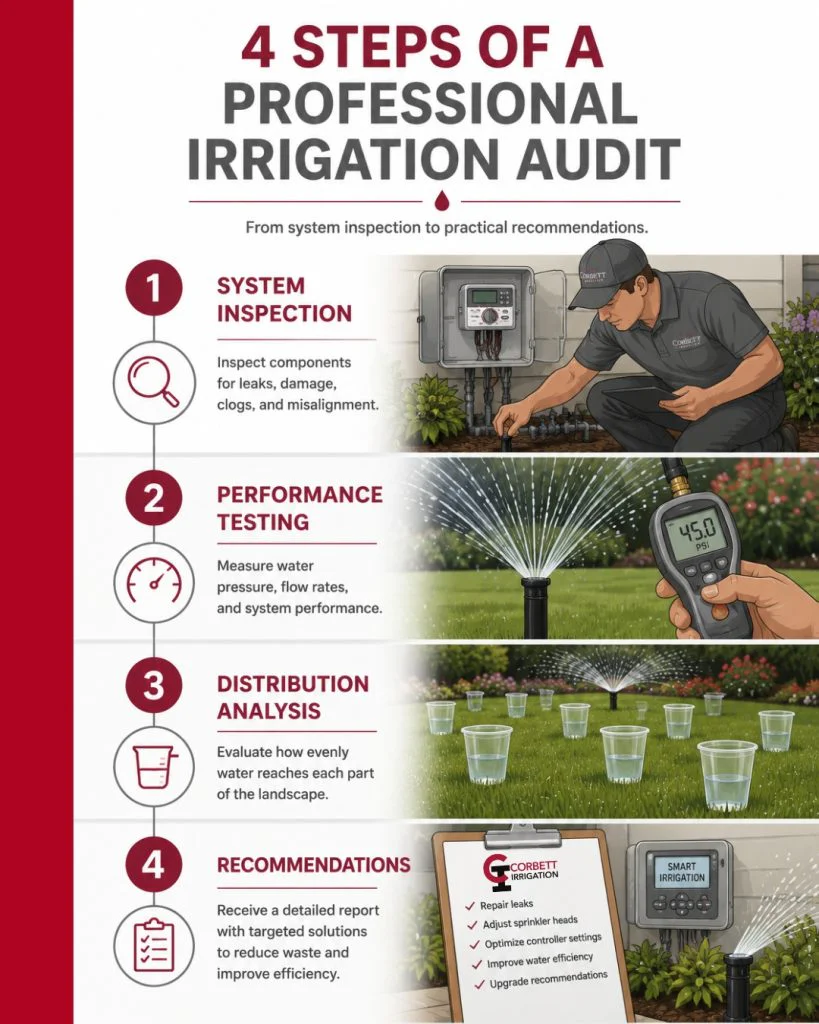
While every property is different, most professional irrigation audits follow a structured process to evaluate your system’s efficiency and identify opportunities for improvement.
1 | System Inspection
The auditor begins by inspecting the entire irrigation system, including sprinkler heads, valves, pipes, backflow devices, and controllers.
They check for leaks, clogged or damaged nozzles, misaligned sprinkler heads, worn components, and other issues that can reduce performance or waste water.
2 | Performance Testing
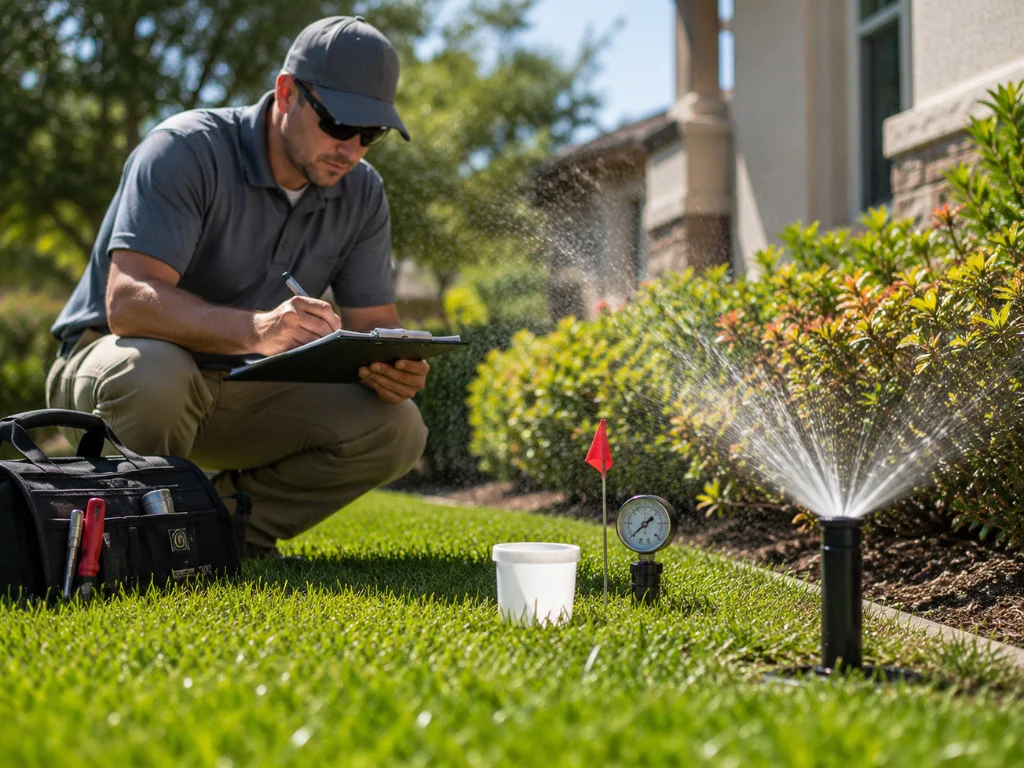
Next, the system is tested while it’s running. The auditor measures water pressure, sprinkler flow rates, and precipitation rates to verify that each irrigation zone is delivering the appropriate amount of water.
They also check whether the controller is programmed with suitable run times and watering schedules for the property’s landscape.
3 | Distribution Analysis
Using catch cups or other specialized tools, the auditor evaluates how evenly water is distributed throughout the landscape.
This process helps identify dry areas, overwatered zones, runoff, overspray onto sidewalks or driveways, and overlapping sprinkler patterns that reduce irrigation efficiency.
4 | Recommendations
After completing the audit, the auditor provides a detailed report outlining the findings and recommended improvements.
These may include repairing leaks, replacing damaged sprinkler heads, adjusting spray patterns, updating controller settings, correcting pressure issues, or installing water-efficient upgrades such as smart irrigation controllers.
Common Problems an Irrigation Audit Can Uncover
Many irrigation problems develop gradually and remain unnoticed because the system continues to operate. An irrigation audit can reveal issues such as:
- Hidden underground leaks
- Misaligned or damaged sprinkler heads
- Uneven sprinkler coverage
- Incorrect irrigation controller settings
- Water pressure that’s too high or too low
- Overspray onto hard surfaces
- Clogged nozzles and worn components
Correcting these problems not only improves irrigation efficiency but also reduces unnecessary water consumption and helps maintain healthier landscapes.
Signs Your Property May Need an Irrigation Audit
Several warning signs suggest it’s time to schedule an irrigation audit.
An unexplained increase in water bills may indicate leaks or inefficient watering. Brown patches mixed with overly wet areas often point to uneven sprinkler coverage. Water pooling after irrigation, sprinklers spraying sidewalks instead of planting beds, or inconsistent plant growth are additional indicators that the system may not be operating efficiently.
Older irrigation systems that haven’t been professionally evaluated in several years can also benefit from an audit, even if no obvious problems are visible.
Make Every Drop Count Before Summer Peaks
Preparing your irrigation system before peak watering season can help improve water efficiency, reduce unnecessary repairs, and keep your landscape healthy all summer long. A professional irrigation audit gives you a clear picture of your system’s performance and identifies opportunities for improvement.
Schedule an irrigation audit with Corbett Irrigation before peak watering season to identify hidden inefficiencies, reduce water waste, and prepare your landscape for summer. Contact our team today to get started.