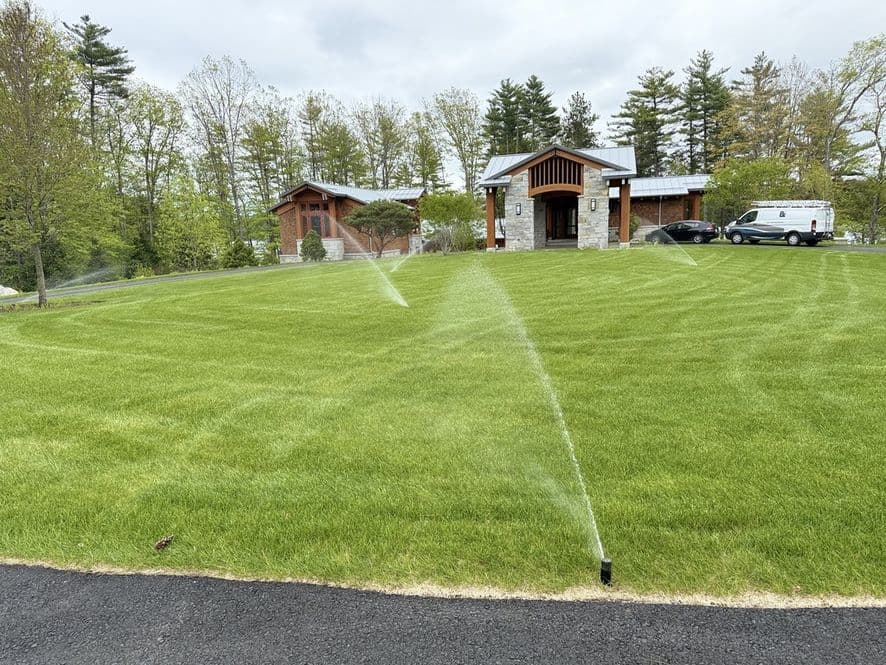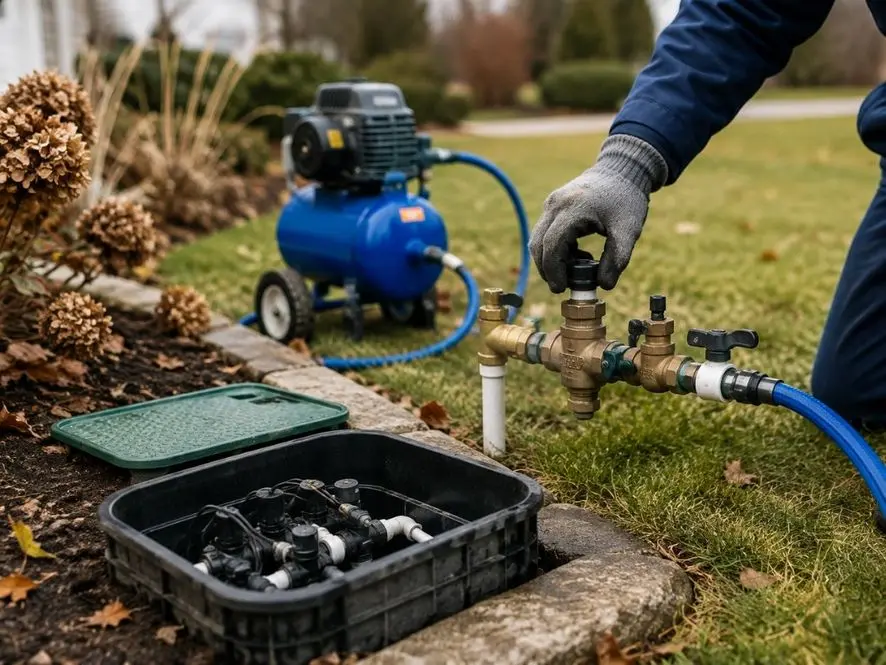

Your sprinkler system is drained and quiet for the season. That makes winter the best time to decide what it should look like next spring. If you own or manage a large property and are weighing new or upgraded irrigation systems in Weston, MA, the months between now and April are when the real planning gets done.
Weston is not a typical town for irrigation. Lots are large, lawns are expansive, and many properties have mature trees, stone walls and specimen plantings that a careless install can damage. Weston also has its own water bylaw, its own backflow paperwork and, according to state figures, some of the highest residential water use in Massachusetts.
This guide covers what makes Weston different, the town rules that shape a system, how to decide between upgrading and replacing, how to water around mature trees, and a simple winter to spring timeline so your system is ready when the season starts.
Quick Answer: Your Weston Irrigation Plan at a Glance
| Question | Short answer |
|---|---|
| Who supplies the water? | The Weston Water Division, which serves about 3,600 customers with water from the MWRA |
| Can the town restrict sprinklers? | Yes. Under Article XXVIII of the town bylaws, the Select Board can limit watering days and hours, or prohibit automatic sprinklers |
| Is backflow paperwork needed? | The Water Division requires a backflow device design data sheet and plumbing plan before a device is installed |
| Can I irrigate from a private well? | Weston’s Board of Health issues well permits, and its application includes an “irrigation well only” option |
| When should I plan? | December to February for assessment and design, so installation can start once the ground can be worked |
| Upgrade or replace? | Many systems can be upgraded with a smart controller, better heads and rezoning instead of a full replacement |
What Makes Irrigation in Weston Different?
Three things set Weston apart: how much water the town uses, the size of its properties, and how mature its landscapes are.
On water use, the Weston Observer reported in July 2026 that, based on MassDEP figures, Weston residents averaged 107 residential gallons per capita per day in 2025, the highest in the state, compared with the state standard of 65. The Water Division superintendent told the paper that use rises from about a million gallons a day in winter to three and a half to four million once sprinklers turn on. In other words, irrigation drives summer demand in Weston.
On property size, an estate lot is not just a bigger yard. It usually has open lawn, long driveway edges, perennial borders, foundation plantings, woodland edges and slopes, each with very different water needs. A sprinkler system that treats all of that the same will overwater some areas and starve others.
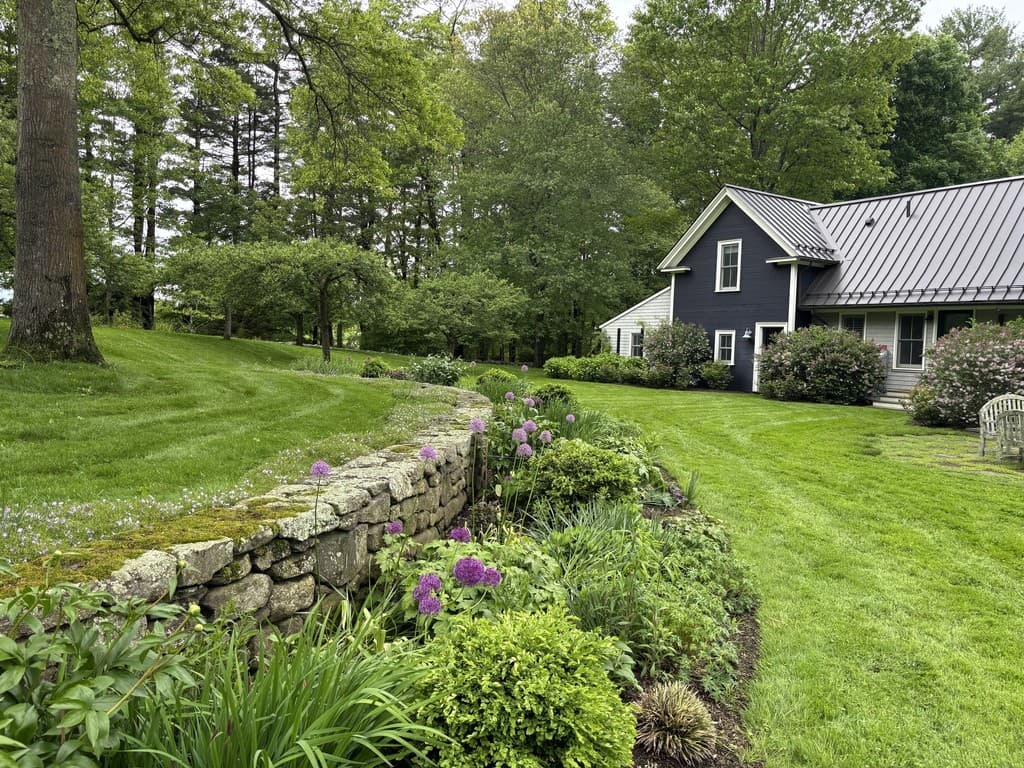
On landscape maturity, many Weston properties have old shade trees, stone walls and established beds that owners want protected. That changes where pipe can run, which heads make sense and how the system is zoned.
What Water Rules Apply to Irrigation Systems in Weston?
A good design starts with the rules it has to live with. Here is what the Town of Weston’s own documents say.
Article XXVIII: the water conservation bylaw
Weston’s General Town By-laws include Article XXVIII, Water Conservation. It lets the Select Board declare a State of Water Supply Conservation when it determines the distribution system is nearing capacity. A declaration can include one or more of these restrictions:
- Odd/even day watering based on your street address
- Hand watering only, with a bucket, can or hand-held hose with an automatic shutoff nozzle
- A full outdoor watering ban
- Set watering hours during periods of low demand
- A ban on automatic sprinkler systems
Fines under the bylaw are $50 for a first violation and $100 for each one after that. The bylaw defines water users as people using water from the Town’s public water source.
This is not theoretical. In July 2022, the Select Board declared a State of Water Supply Conservation that limited outdoor watering to odd or even days by address and to the hours of 6 p.m. to 6 a.m. Restrictions are announced through public notice, so check the Town’s current notices each season.
What this means for design: your system should be able to put down the right amount of water on fewer days and in a short night or early morning window. That favors efficient rotors, drip in beds and a controller that can store more than one schedule.
Planning Board conditions for new landscapes
If your project goes through Weston Planning Board review, expect water conservation conditions. The Town has posted adopted outdoor water conservation conditions that replaced the Board’s older irrigation well policy. They include:
- Below-ground trickle (drip) irrigation for automatically watered plant and shrub beds, not above-ground automatic irrigation
- EPA WaterSense certified weather-based smart controllers with leak detection, and WaterSense labeled pressure regulators, spray heads and nozzles
- 6 to 8 inches of topsoil rich in organic matter in new lawn and bed areas
- Guidelines such as watering only before 10 a.m., hydrozoning plants with similar water needs, and avoiding lawn under large trees and on steep slopes
Even if your project never goes before the Planning Board, these conditions are a useful benchmark for what an efficient Weston system looks like.
Backflow protection
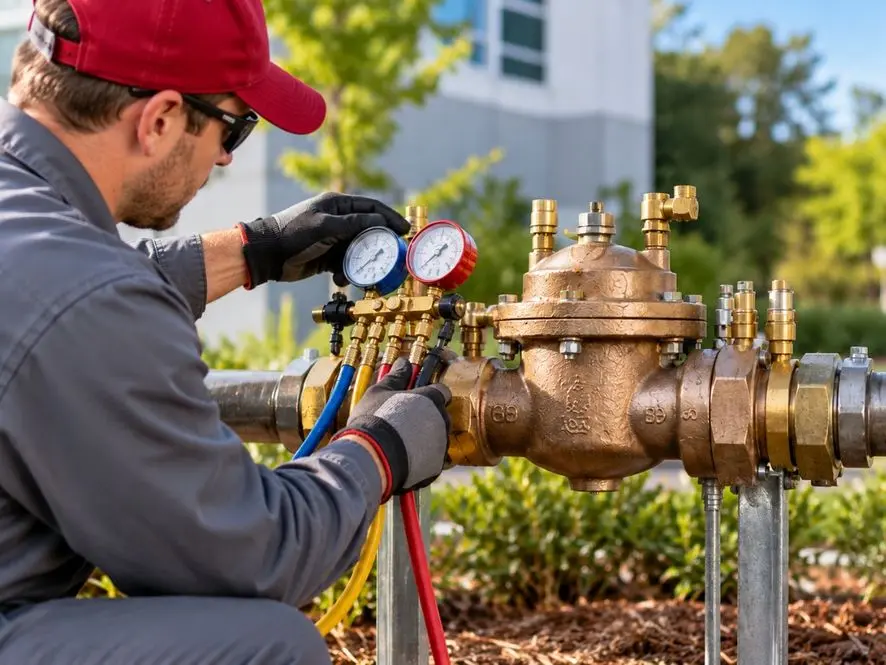
Every irrigation system connected to drinking water needs backflow protection, so irrigation water cannot be drawn back into the supply. In Weston, the Water Division’s backflow device design data sheet states that the design data and a plumbing plan must be submitted to the Water Superintendent before installation, and that devices must be installed in accordance with the state cross connection rules, 310 CMR 22.22.
Under MassDEP’s Cross Connection Control Program Manual, registered double check valve assemblies are tested annually and reduced pressure backflow preventers semiannually by a MassDEP certified tester. For pressure vacuum breakers, which are common on irrigation systems, MassDEP strongly recommends testing at least once a year. Our backflow testing and certification service handles this, and our guide to backflow testing in Massachusetts explains what to expect.
Private wells for irrigation
Some Weston owners ask about irrigating from a private well. The Weston Board of Health handles well permits, and its well permit application includes an “irrigation well only” option and asks the applicant to confirm they have read the Town’s private well regulations. If a well is part of your plan, start the permit conversation with the Board of Health over the winter. We can design the system and pump connection around it once it is approved.
Should You Upgrade Your Existing System or Replace It?
Many Weston properties already have a sprinkler system, often one installed before smart controllers and drip were common. The good news is that you do not always need to start over.
Our irrigation system upgrades page puts it simply: many properties benefit from targeted upgrades without a full replacement. Here is how we usually think about it.
An upgrade usually makes sense when:
- The main lines and valves are sound and leaks are rare
- Coverage problems are limited to certain zones
- The controller is an old clock timer with no weather or sensor input
- Beds are watered by spray heads that could be converted to drip
A larger renovation or replacement makes sense when:
- You are repairing leaks and broken pipe every season
- The landscape has changed so much that the zones no longer match it
- Mixed head types in the same zone leave some areas soggy and others dry
- Nobody knows where the valves and lines actually run
A smart irrigation controller upgrade is often the easiest first step. According to the U.S. EPA, replacing a clock-based controller with a WaterSense labeled irrigation controller can save an average home up to 15,000 gallons of water a year. For a full checklist of warning signs, see our post on 7 signs your irrigation system needs a retrofit.
How Do You Irrigate an Estate Lot With Mature Trees and Specimen Plantings?
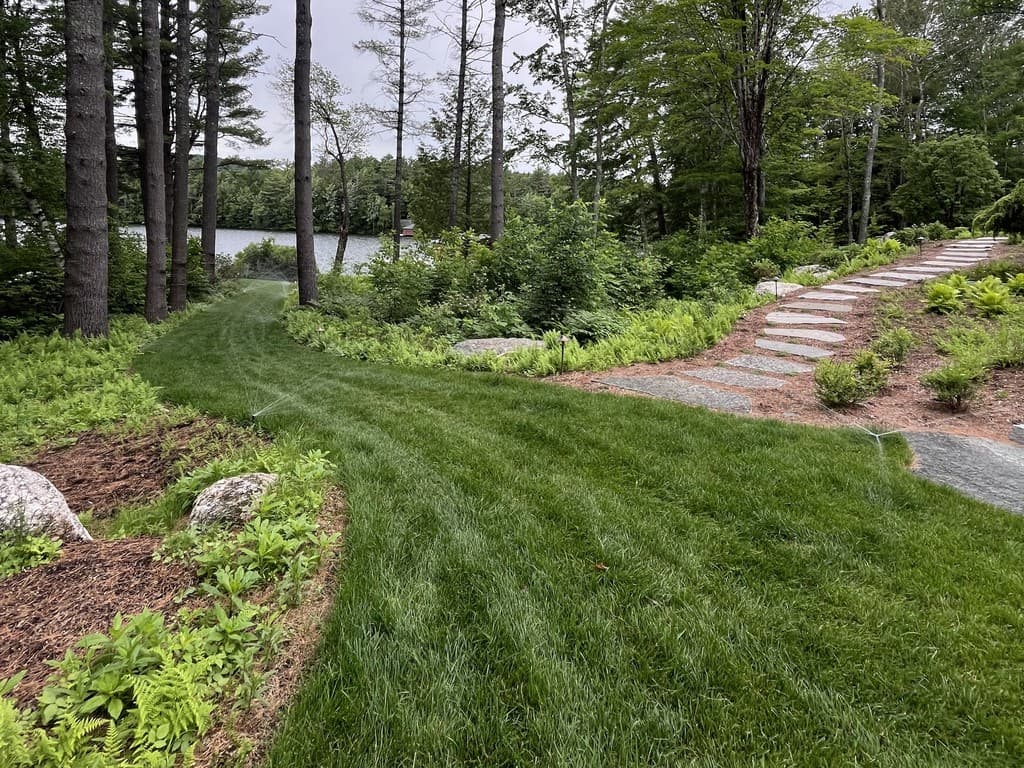
Large trees and prized plantings are the reason many Weston owners want irrigation, and also the features most at risk during an install. Our estate irrigation services start with a full property evaluation of soil, sun, drainage, plant types, terrain and water pressure. From there, a few principles guide the design.
- Zone by plant type and exposure. Open lawn, shaded lawn under canopy, perennial borders, shrub beds and specimen trees each get their own zones. This is the hydrozoning approach the Town’s conditions recommend.
- Use drip for beds and plantings. Drip delivers water at the roots, which matches the Planning Board’s preference for below-ground trickle irrigation in beds. EPA notes that as much as 50 percent of outdoor water can be lost to wind, evaporation and runoff from inefficient irrigation.
- Respect the root zone. Pipe routes are planned around large trees instead of straight through them, so trenching does not cut major roots.
- Rethink lawn under heavy shade. The Town’s guidelines advise against lawn where grass will not thrive, such as under large trees. Sometimes the best irrigation answer is a planting change.
- Control slopes. Shorter, repeated cycles help water soak in instead of running down a slope onto a driveway.
- Map everything. Our GIS and digital zone mapping records where every zone, valve and line runs, which protects your landscape the next time anyone digs. Our post on irrigation zone maps explains why that matters.
What Should a Weston Irrigation Plan Include?
Whether you are upgrading or starting fresh, a complete plan for a Weston property should cover:
- Water source: Town water, a permitted irrigation well, or both, with measured pressure and flow
- Zone plan: separate zones for lawn, shade, beds, slopes and specimen trees
- Head and drip selection: rotors for open lawn, sprays for small areas, drip for beds
- Smart controller and sensors: a WaterSense labeled controller with rain or soil moisture input, and flow sensing for leak detection where practical
- Restriction-ready schedules: programs that still work if odd/even days or night-only hours are declared
- Backflow device and paperwork: the Water Division design data sheet and plumbing plan before installation
- Protection plan: pipe routes around root zones, walls and hardscape
- As-built map: a record of zones, valves and lines for future service
A Winter to Spring Timeline for Weston Projects
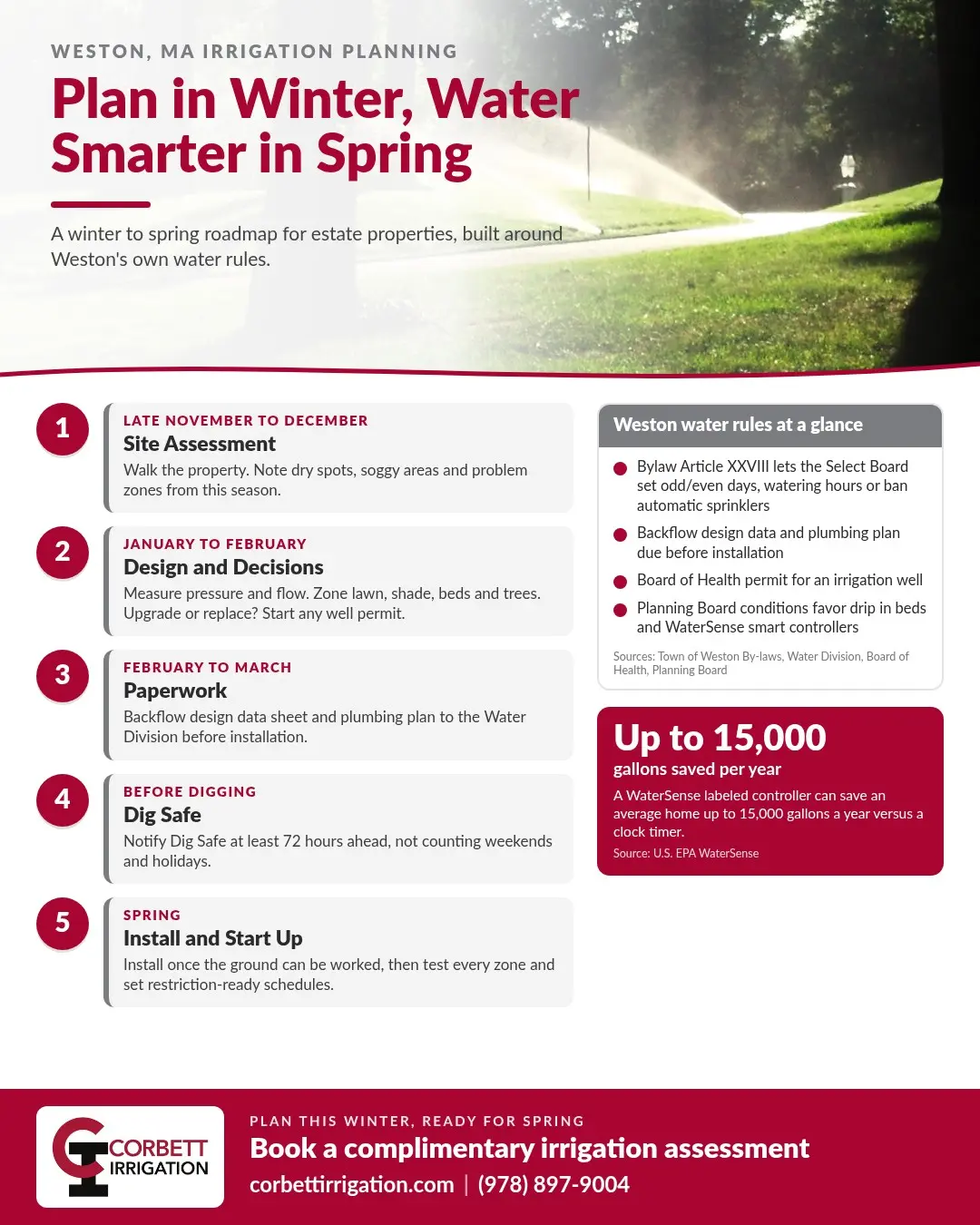
Here is how we suggest using the off-season so your system is ready for the 2027 season.
- Late November to December: assessment. We walk the property, review how the existing system performed this year, and note dry areas, soggy spots and problem zones while they are still fresh in your mind.
- January to February: design and decisions. We measure the water supply, lay out zones, choose heads, drip and controller, and agree on upgrade versus replacement. This is the time to start any well permit with the Board of Health.
- February to March: paperwork. The backflow design data sheet and plumbing plan go to the Water Division, Planning Board conditions are reviewed if they apply, and we confirm the schedule.
- Before digging: Dig Safe. Massachusetts law requires anyone digging to notify Dig Safe at least 72 hours ahead, not counting weekends and holidays. Private lines such as existing sprinkler pipe and landscape lighting are not marked, which is another reason an as-built map is so valuable.
- Spring, once the ground can be worked: installation. Pipe, valves, the backflow device, heads, drip and controller go in, followed by testing and a walkthrough.
- Start of the season: start-up and fine tuning. Each zone is checked, schedules are set, and the backflow device is tested.
At the end of the season, your system will need a proper shutdown again. Our Massachusetts irrigation winterization checklist covers that step by step.
What to Ask Before You Hire a Weston Irrigation Contractor
Use these questions when you compare proposals:
- Will you measure my water pressure and flow before designing?
- How will you zone lawn, shade, beds, slopes and trees separately?
- Will beds be watered with drip, and is the controller WaterSense labeled?
- How will you handle the Weston Water Division backflow paperwork?
- Can the controller store schedules for odd/even days and night-only hours?
- How will you protect tree roots, stone walls and hardscape?
- Will I receive a map of zones, valves and lines when the work is done?
Frequently Asked Questions
Does Weston restrict automatic sprinkler systems?
It can. Article XXVIII of the town bylaws allows the Select Board to declare a State of Water Supply Conservation, which can include odd/even day watering, set hours, a full outdoor watering ban or a ban on automatic sprinklers. In 2022 the Board limited watering to odd/even days and 6 p.m. to 6 a.m. Check the Town’s current notices for the latest status.
Do I need approval for a backflow device in Weston?
Yes. The Weston Water Division’s design data sheet states that the backflow device design data and a plumbing plan must be submitted to the Water Superintendent before installation, and devices must meet 310 CMR 22.22.
Can I use a private well for irrigation in Weston?
The Weston Board of Health issues well permits, and its application includes an “irrigation well only” option. Talk to the Board of Health about its private well regulations before you plan around a well.
Is it worth upgrading an older sprinkler system instead of replacing it?
Often, yes. If the main lines and valves are in good shape, a smart controller, better heads, drip in beds and rezoning can fix most performance problems. A site assessment tells you which route makes sense.
When should I plan a new irrigation system in Weston?
Plan over the winter. Design and paperwork take time, and installation needs ground that can be worked. Finishing the plan by early spring means your project is ready to schedule as soon as conditions allow.
Planning a project in Acton too?
Acton has different water rules. Read our guide to planning a new irrigation system in Acton, MA.
Plan Your Weston Irrigation Project This Winter
A well planned system protects the trees, lawns and plantings that make a Weston property special, and it is built to work within the Town’s water rules from its first day. Winter is the time to get the assessment, design and paperwork done so spring is only about building.
Since 2001, Corbett Irrigation has designed, upgraded and serviced irrigation systems for estate and residential properties across Massachusetts, including Weston. Book a complimentary irrigation system assessment or call us at (978) 897-9004. You can also explore our irrigation system design and installation services and our full range of irrigation services in Weston, MA.